

The best way to ensure a clean and healthy smile is brushing and flossing. Food particles can accumulate on teeth and in braces, and over time, turn into plaque. The bacteria that results from this accumulation can lead to gum disease, tooth decay and even loss of teeth. To avoid these problems while you are in orthodontic treatment, take special care of your braces, teeth and gums to ensure you will have the best possible result.
Oral hygiene video tutorials
Short how-to videos on caring for your braces at home — brushing, flossing, diet, and handling the unexpected.
Brushing
Use a toothbrush with soft bristles and a small strip of fluoride toothpaste. When you brush your teeth, move the brush in small, circular motions to reach food particles that may be under your gum line. Hold the toothbrush at an angle and brush slowly and carefully, covering all areas between teeth, between braces and the surface of each tooth. It will take you several minutes to thoroughly brush your teeth. Brush up on the lower teeth, down on the upper teeth and the outside, inside and chewing surface of your front and back teeth. Brush your tongue and the roof of your mouth before you rinse.
You will need to replace your toothbrush more often due to your appliances. As soon as the bristles start to wear down or fray, replace your toothbrush with a new one. It may be difficult for your toothbrush to reach some areas under your archwire. Do not swallow any toothpaste; rinse your mouth thoroughly with water after you finish brushing. It is important to floss and use an antibacterial mouthwash and fluoride treatment throughout your orthodontic treatment and beyond for optimal oral hygiene.
Flossing
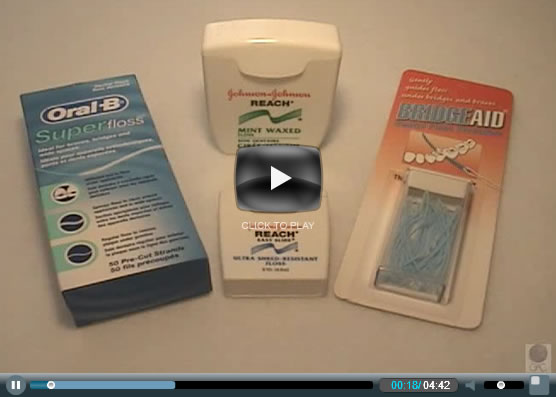
For areas between the teeth that a toothbrush can’t reach, use dental floss to remove food particles and plaque. Flossing takes more time and patience when you are wearing braces, but it is important to floss your teeth every day.
Use the reusable floss threader provided by our office to floss under your archwire daily. Pull a small length of floss from the dispenser through the threader and slide it up and down along the front of each tooth. You will be able to feel when the tooth is clean and hear the squeak of the floss against your clean teeth. Use care around your archwire and do not floss too forcefully around it or put too much pressure on it. After you floss between your archwire and braces, floss between your other teeth and gums.
If you are flossing without the floss threader, pull a small length of floss from the dispenser. Wrap the ends of the floss tightly around your middle fingers. Guide the floss between all teeth to the gum line, pulling out food particles or plaque. Unwrap clean floss from around your fingers as you go, so that you have used the floss from beginning to end when you finish. Floss behind all of your back teeth. Floss at night to make sure your teeth are clean before you go to bed. When you first begin flossing around your braces, your gums may bleed a little. If the bleeding does not go away after the first few times, inform a staff member at your next appointment.
Brushing & flossing, answered.
Questions about keeping your braces clean? Bring them to your next visit or a complimentary consultation — every initial exam includes time with the doctor.
Book a complimentary examHow often should I brush with braces?
Brush four times daily during orthodontic treatment — after breakfast, after lunch or school, after supper, and at bedtime — using a soft-bristled brush and a small strip of fluoride toothpaste in small, circular motions.
How do I floss with braces?
Use the reusable floss threader provided by our office to guide floss under your archwire, then slide it up and down each tooth. Floss between your other teeth and gums daily, ideally at night.
My gums bleed when I floss around my braces — is that normal?
When you first begin flossing around braces your gums may bleed a little. If the bleeding does not go away after the first few times, let a staff member know at your next appointment.
How often should I replace my toothbrush?
Replace your toothbrush more often than usual during treatment. As soon as the bristles start to wear down or fray, switch to a new one so it keeps cleaning effectively around your appliances.
Related pages
Complimentary exam. No referral required.
Choose any of our six Boston-area offices. We'll evaluate your bite, walk you through the options, and put it all in writing — no pressure, no obligation.